
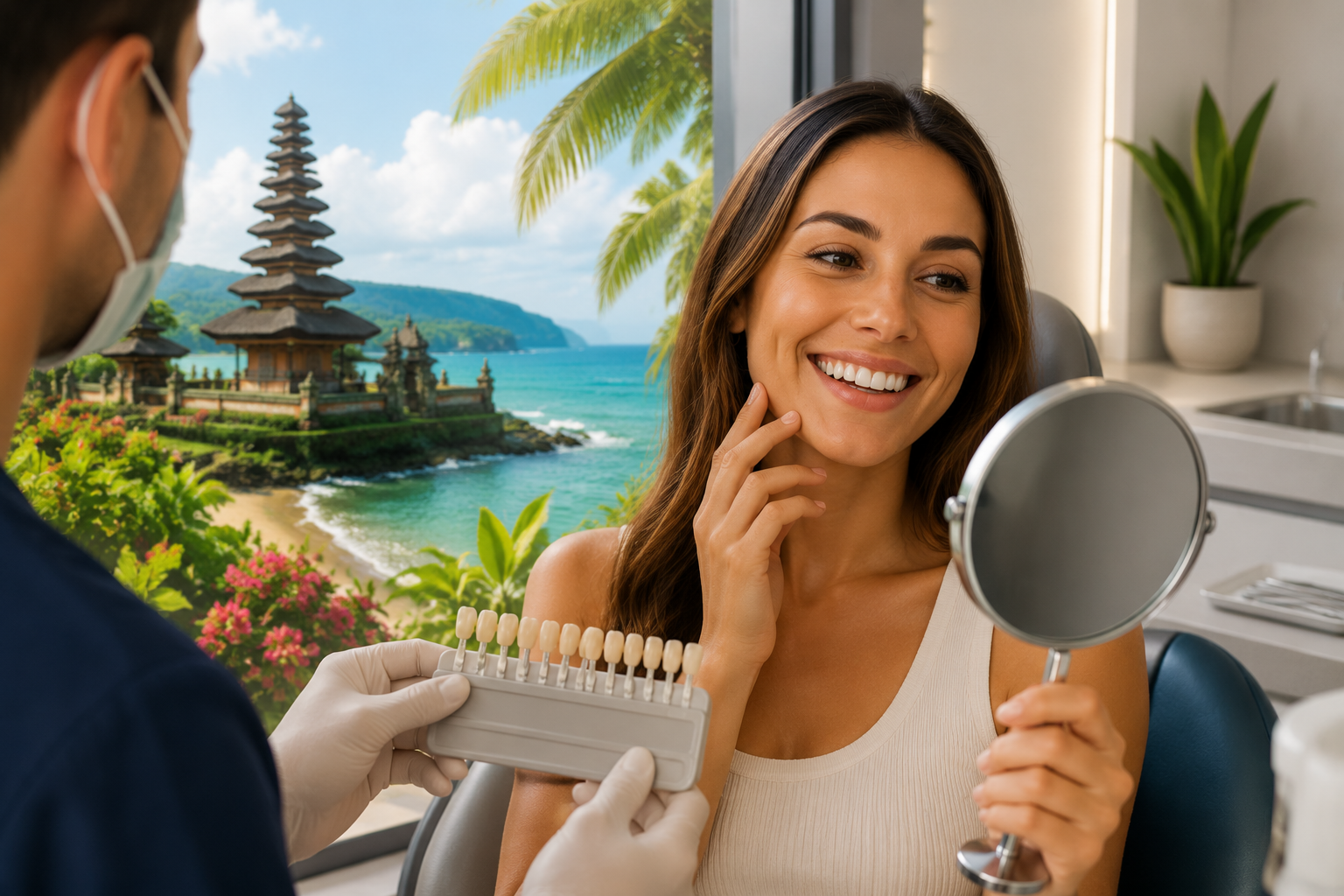
Scroll through TikTok for five minutes and you’ll find it, someone showing off a brand-new smile, captioned with a price that seems impossible compared to an Australian quote. Veneers in Bali have become one of the most-searched cosmetic dental topics in Australia, and the appeal is completely understandable: the savings are real, and the flights are cheap. But veneers are also one of the few dental treatments that permanently changes your teeth, and that’s the part the highlight reels tend to skip. Here’s an honest look at what’s involved, so you can make the decision with the full picture.
Key Insights
- Veneers are irreversible. Most porcelain veneers require permanent removal of healthy enamel, once done, that tooth will always need a veneer or crown.
- The price gap is real, but incomplete. Overseas quotes rarely include flights, accommodation, follow-up visits, or the cost of correcting problems later.
- Aftercare is the biggest practical risk. If a veneer fails six months later, returning to the original clinic is usually impractical.
- Regulation differs. Australian dentists work under AHPRA and the Dental Board of Australia, with defined complaint and indemnity pathways that don’t extend overseas.
How Much Are Veneers in Australia vs Bali?
Direct answer: In Australia, porcelain veneers typically range from around $1,200 to $2,500 per tooth, while Bali clinics often advertise from roughly $300 to $600 per tooth. The gap is genuine, but the advertised overseas price is usually not the total cost.
A realistic comparison includes:
- Flights and accommodation for a stay long enough to complete treatment (often 5–10 days, sometimes two trips)
- Time off work
- Follow-up appointments, which may need to happen in Australia anyway
- Travel insurance gaps, many Australian policies exclude complications arising from elective overseas procedures. This is worth reading closely before you book.
- Potential corrective work, which is generally more expensive than the original treatment
The honest position is this: for some people, even with those extras, overseas treatment still costs less. The decision shouldn’t be based on price alone, it should be based on price and what happens if something goes wrong.
What Does Getting Veneers Actually Involve?
Direct answer: Most porcelain veneers require a thin layer of enamel to be permanently removed so the veneer sits flush against the tooth. Enamel does not grow back.
This is the single most important fact in the entire conversation, and it applies whether treatment happens in Parramatta or Denpasar.
Once enamel is reduced, the tooth is permanently reliant on a veneer or crown for protection. If the veneer chips, debonds or fails years later, it must be replaced, not simply removed. Teeth prepared too aggressively can also become sensitive or, in some cases, develop pulp inflammation requiring root canal treatment.
There are more conservative options — including minimal-prep veneers and composite bonding — that may suit some cases. Whether they’re appropriate depends entirely on your individual teeth, bite and goals, which is something that can only be assessed in person. Our porcelain veneers page explains how the process works in more detail.
Why Speed Should Raise Questions
Many overseas packages compress treatment into a few days. Some cases genuinely can be completed quickly. Others shouldn’t be, particularly where gum health, bite issues or decay need addressing first.
Rushing the diagnostic stage is where problems tend to originate, regardless of the country. A thorough assessment before any enamel is touched matters more than where the chair is located.
Dental Tourism in Bali: Practical Realities
Direct answer: The main practical risks aren’t about clinical skill, they’re about continuity of care, follow-up access, and recourse if something goes wrong.
Points worth weighing honestly:
- Follow-up access. Veneers sometimes need adjustment after the bite settles. Returning to Bali for a minor fix isn’t realistic for most people.
- Records and materials. Australian dentists correcting overseas work often have limited information about what materials were used or how much tooth structure was removed.
- Regulatory recourse. Australian practitioners are registered with AHPRA and accountable to the Dental Board of Australia, with formal complaint pathways and professional indemnity requirements. Those frameworks don’t apply to treatment received overseas.
- Infection control standards vary between clinics in any country, including Australia, but verifying them from abroad is considerably harder.
- DFAT’s Smartraveller publishes general guidance on medical and cosmetic procedures overseas that’s worth reading before booking.
None of this means overseas dentistry is inherently unsafe, and there are excellent clinicians working in Bali. It means the risk profile is different, and the safety net is thinner.
Questions Worth Asking Before You Book Anywhere
These apply equally to a clinic in Bali or Parramatta:
- How much enamel will be removed, and is a more conservative option suitable?
- Will I see a written treatment plan and itemised quote before anything starts?
- What happens — and what does it cost — if a veneer fails in 12 months?
- Who makes the veneers, and what materials are used?
- Is my gum health and bite being assessed before the cosmetic work begins?
If cost is the main driver, it’s also worth knowing that treatment can often be staged or spread out. We offer flexible payment plans precisely so that cost pressure doesn’t force a rushed decision on an irreversible procedure.
Getting a Second Opinion in Parramatta
If you’re weighing up overseas treatment, a local consultation before you fly is genuinely useful, not as a sales pitch, but to understand your own teeth. Knowing whether you’re a candidate for minimal-prep veneers, whether your bite needs attention first, or whether orthodontics would achieve your goal more conservatively, puts you in a far stronger position wherever you ultimately have treatment done.
You can read more about our approach on our cosmetic dentistry page, or browse other guides on our dental blog.
Frequently Asked Questions
Q: Are veneers in Bali safe? A: Safety depends on the individual clinic, the clinician’s training, and infection control standards, which vary in every country. The more significant issue for most Australians is what happens afterwards: follow-up care, access to records, and formal recourse if a problem develops are all considerably harder to arrange from overseas. Researching the specific clinic and practitioner matters far more than the country itself.
Q: How much are veneers in Australia? A: Porcelain veneers generally range from around $1,200 to $2,500 per tooth, depending on the material, the complexity of your case, and the laboratory used. Composite veneers typically cost less but have a shorter lifespan. An in-person assessment and written quote is the only way to know your actual cost.
Q: Can an Australian dentist fix veneers done overseas? A: Yes, in most cases, though corrective work is often more complex and more expensive than the original treatment, particularly if significant enamel was removed or the bite was altered. Bringing any records, x-rays or material details you have will help considerably.
Q: Do veneers ruin your teeth? A: Veneers don’t “ruin” teeth, but most porcelain veneers do permanently remove enamel, which means the tooth will always need to be covered afterwards. This is why the decision deserves careful thought rather than a quick booking and why conservative alternatives are worth discussing first.
The Bottom Line
Veneers in Bali are popular for a genuine reason: the price difference is real, and many people have good outcomes. But veneers permanently change your teeth, and the parts that matter most, thorough assessment beforehand and reliable care afterwards, are the hardest things to guarantee from 4,500km away.
Whatever you decide, go in informed. If you’d like an honest assessment of your options before committing to anything, you’re welcome to book a consultation with our team in Parramatta.
Written by My Smile Doctors, Parramatta Dental Clinic. This article is general information only and does not constitute personal dental advice. Individual results vary — please consult a registered dental practitioner about your circumstances.