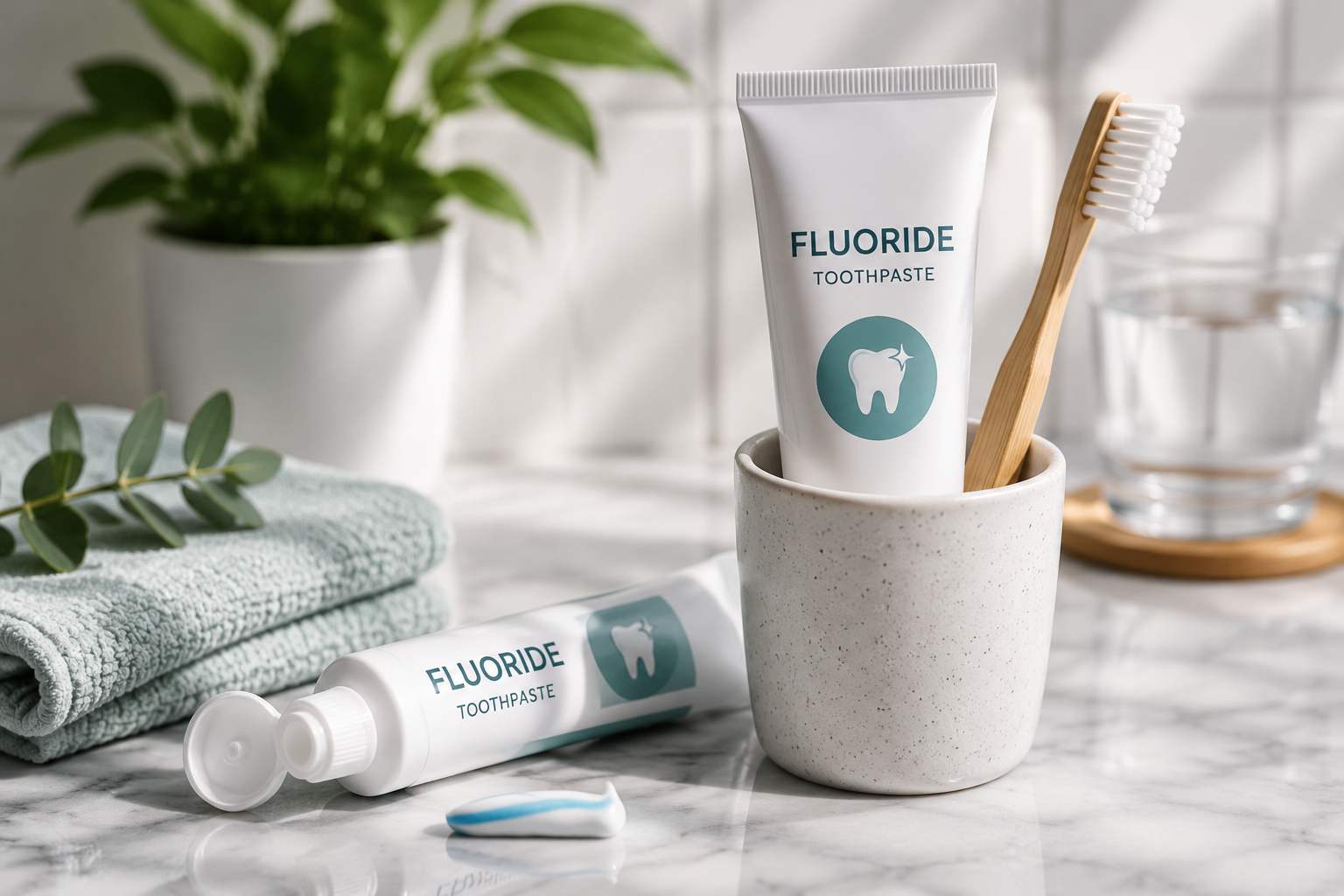
If your social media feed looks anything like most people’s right now, you have probably seen someone explaining why they threw out their old toothpaste. Fluoride free toothpaste has become one of the biggest wellness trends in oral care, and searches for it in Australia have climbed sharply over the past year. Plenty of patients bring it up with us, often a little sheepishly, wondering whether they have been doing something wrong all these years. It is a fair question and it deserves a proper answer rather than a lecture, so here is what the evidence actually shows.
Key Insights
- Fluoride is one of the most thoroughly studied ingredients in dentistry, and decades of research support its role in preventing tooth decay.
- The safety concerns circulating online generally relate to swallowing large amounts over long periods, not to using a pea sized amount of toothpaste twice a day.
- Nano hydroxyapatite is a genuine alternative with promising early research, though the evidence base behind it is still much smaller than the one behind fluoride.
- If you choose to go fluoride free, your decay risk becomes more dependent on diet, brushing technique and regular professional check ups.
What Does Fluoride Actually Do?
Fluoride helps rebuild the mineral surface of your teeth and makes enamel more resistant to the acid that causes decay.
Every time you eat something containing sugar or starch, bacteria in your mouth produce acid. That acid pulls minerals out of your enamel in a process called demineralisation. Saliva naturally puts some of those minerals back, and fluoride makes that repair process considerably more effective. It also forms a slightly tougher mineral structure in the enamel surface, which stands up better to the next acid attack.
This is why fluoride works best applied directly to the teeth rather than swallowed. Brushing with a fluoride toothpaste, then spitting rather than rinsing, keeps a small amount in contact with your enamel where it does its job.
Is Fluoride Bad for You?
At the levels found in toothpaste and Australian drinking water, the evidence does not support the claim that fluoride is harmful.
We want to be honest about where the concern comes from, because it is not invented. Fluoride can cause problems at high doses. Dental fluorosis, which shows up as faint white flecks or streaks on the teeth, happens when children swallow too much fluoride while their adult teeth are still forming. Skeletal fluorosis, a much more serious condition affecting bones, occurs in parts of the world where groundwater contains naturally very high fluoride levels, far above anything permitted here.
Those are real conditions. They are also dose dependent, which is the part that usually gets lost in a thirty second video. The amount in a pea sized smear of toothpaste, used twice daily and spat out, sits well below the thresholds involved.
The Australian Dental Association and the National Health and Medical Research Council both continue to support fluoride use for decay prevention. The World Health Organization takes the same position.
Why the Debate Feels So Loud Right Now
Much of the current conversation stems from international policy arguments about adding fluoride to public water supplies, which is a different question to whether you should use fluoride toothpaste. Water fluoridation involves public health policy, consent and dosage across a whole population. Toothpaste is a topical product you control completely. The two get blended together online, and that is where a lot of the confusion starts.
What About Hydroxyapatite Toothpaste?
Nano hydroxyapatite is the most credible fluoride alternative currently available, and early research is genuinely encouraging.
Hydroxyapatite is the mineral your enamel is largely made from, so the logic of using it to help remineralise teeth makes sense. It has been used in Japan for decades and a growing number of studies suggest it can help with remineralisation and sensitivity.
The honest caveat is scale. Fluoride has roughly seventy years of large scale population data behind it. Hydroxyapatite has a much smaller and more recent body of evidence. That does not make it a bad product, and for some patients it is a reasonable option. It simply means we cannot yet claim it matches fluoride’s track record, and anyone telling you otherwise is going beyond what the research supports.
Other fluoride free options, particularly charcoal based pastes, are a different story. Some are abrasive enough to wear enamel over time, and abrasion does not grow back. If whitening is your goal, our teeth whitening page explains safer approaches.
Should Children Use Fluoride Toothpaste?
Australian guidelines recommend fluoride toothpaste for children, with the amount adjusted for age.
Broadly, children under 18 months usually do not need toothpaste at all, just gentle brushing with water. From around 18 months to five years, a low fluoride children’s toothpaste in a smear about the size of a pea is generally advised, with an adult supervising to encourage spitting rather than swallowing. From about six years, most children can move to standard family toothpaste.
Supervision matters more than the brand. Swallowing toothpaste regularly during the years when adult teeth are forming is the main scenario linked to fluorosis, and that is easily avoided with a little oversight at the sink.
If you are unsure what suits your child, this is a good conversation to have at a routine visit. Our dental check up page explains what those appointments involve.
If You Choose Fluoride Free, What Should You Watch?
Going fluoride free is your decision to make, and some people have perfectly healthy teeth without it. What changes is that your other protective habits carry more of the load.
Worth paying closer attention to:
- Sugar frequency. How often you eat sugar matters more than how much. Grazing and sipping sweet drinks through the day gives bacteria repeated opportunities to produce acid.
- Brushing technique and timing. Twice daily, two minutes, gentle pressure, and spit without rinsing.
- Early warning signs. Sensitivity to cold or sweet things, or any dark spot or rough patch on a tooth, is worth having looked at rather than waited out.
- Gum health. Bleeding when you brush is not normal and is often the first sign of a problem. Our gum disease page covers what to look for.
- Check up frequency. If you have removed a preventive measure, catching problems early becomes more valuable.
Frequently Asked Questions
Q: Is fluoride free toothpaste better for your teeth? A: For most people, no. Fluoride toothpaste has a substantially stronger evidence base for preventing tooth decay than any current alternative. Fluoride free options may suit some patients, particularly those who have had a genuine reaction or who are managing a specific condition, but as a general upgrade it is not supported by the evidence.
Q: Can I use hydroxyapatite toothpaste instead of fluoride? A: It is a reasonable option for some people and the early research is promising, especially for sensitivity. Because the evidence base is smaller than fluoride’s, we would suggest discussing it with your dentist first, particularly if you have a history of cavities or are at higher risk of decay.
Q: How much fluoride toothpaste should my child use? A: Children under 18 months generally do not need toothpaste. Between roughly 18 months and five years, a smear of low fluoride children’s toothpaste about the size of a pea is typically recommended, with supervision so they spit rather than swallow. From about six years, standard family toothpaste is usually appropriate. Your dentist can give advice specific to your child.
Q: Does fluoride whiten teeth? A: No. Fluoride strengthens enamel and helps prevent decay, but it does not change the colour of your teeth. Whitening works through a different process entirely, and it is worth having a professional assessment first, since some discolouration comes from underlying issues that whitening will not fix.
The Bottom Line
Fluoride free toothpaste has become popular for understandable reasons. People want to know what they are putting in their bodies, and asking questions about it is sensible rather than paranoid. What the evidence currently shows is that fluoride, used as directed, remains the most reliable way to protect teeth from decay, and the safety concerns circulating online generally involve doses far beyond what brushing delivers.
If you are weighing this up, or you have already switched and want to know whether your teeth are holding up, that is a genuinely useful thing to check rather than guess at. You can read more of our guides on our dental blog, or book a check up with our team in Parramatta and we can talk it through properly.
Written by My Smile Doctors, Parramatta Dental Clinic. This article is general information only and is not personal dental advice. Everyone’s teeth and risk factors are different, so please speak with a registered dental practitioner about your own circumstances.