
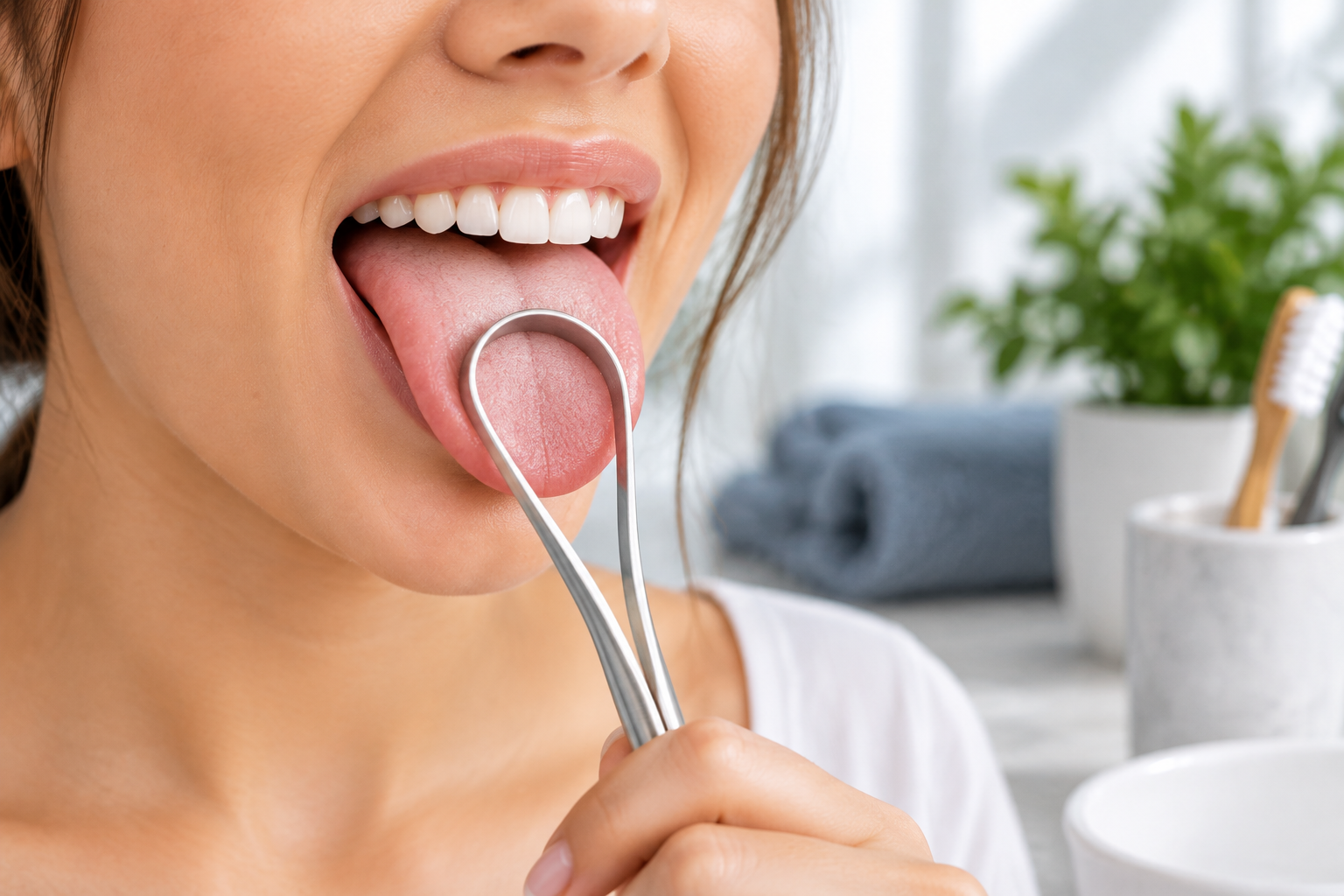
If your feed keeps showing people scraping a white film off their tongue each morning, you have probably wondered whether you should be doing it too. Tongue scraping has become one of the most popular oral care habits on TikTok, and it is worth being curious about. The honest answer is that it does something real, just more modestly than the videos suggest, and it can occasionally hide a problem worth checking.
Key Insights
- Tongue scraping removes the coating of bacteria, food debris and dead cells that builds up on the surface of the tongue.
- That coating is a major source of the sulphur compounds that cause bad breath, so scraping can freshen breath in the short term.
- Research has not reached clear conclusions about whether tongue scraping reduces bad breath long term, so the evidence is modest rather than proven.
- A white patch that does not scrape away, or persists beyond two weeks, should be checked by a dentist.
What Does Tongue Scraping Actually Do?
Tongue scraping removes the soft coating that forms on the top of your tongue. That coating is made of bacteria, food particles and dead skin cells trapped between tiny bumps on the tongue’s surface.
Those bumps are called papillae, and they are very good at holding onto debris. Overnight especially, bacteria settle between them and form a pale film. This is completely normal.
A scraper is a thin, curved strip of metal or plastic drawn gently from the back of the tongue to the front, lifting that film away.
Is Tongue Scraping Good for Bad Breath?
Tongue scraping can reduce bad breath in the short term, because the tongue coating is a major source of the sulphur compounds that cause odour. Whether it helps long term is less certain, since research has not reached clear conclusions.
Here is the part the videos usually skip. The bacteria living in that coating break down proteins and release volatile sulphur compounds, which are what give bad breath its distinctive smell. Remove the coating and you remove a lot of the source, which is why breath often feels fresher straight away.
The longer term picture is murkier. A systematic review found no clear conclusions about tongue cleaning and bad breath over time, partly because the studies were small and varied. So the evidence is encouraging but limited. That does not mean it fails. It means nobody has proven how much it helps, or for how long.
What it is not is a detox. Tongue scraping comes from Ayurvedic tradition, and some claims describe it as removing toxins from the body. There is no evidence for that. It cleans your tongue, which is useful enough.
Tongue Scraper or Toothbrush, Which Is Better?
A tongue scraper removes tongue coating slightly more effectively than a toothbrush for most people, though the difference is modest. Either is far better than not cleaning your tongue at all.
| Tongue scraper | Toothbrush on the tongue | |
| Removes coating | Slightly more effective | Effective |
| Gag reflex | Easier to reach the back | Bristles trigger gagging more easily |
| Cost | Low, reusable for months | No extra cost |
| Replaces brushing | No | No |
The last row matters most. Neither replaces brushing your teeth twice a day and cleaning between them. Our guide to brushing and flossing covers the routine that does most of the work.
How to Use a Tongue Scraper Safely
Gentle pressure matters more than force. Scraping too hard can irritate the papillae and make your tongue sore.
- Stand in front of a mirror and stick your tongue out.
- Place the scraper as far back as is comfortable, without triggering your gag reflex.
- Press lightly and draw it forward to the tip.
- Rinse the scraper and repeat two to four times.
- Wash the scraper afterwards and let it dry.
Once a day is plenty, ideally in the morning when the coating is thickest. If your tongue bleeds or stays sore, ease off. You can find more everyday habits in our dental hygiene tips.
When Is a White Tongue Something to Check?
A thin white coating that scrapes off easily is normal. A white patch that does not come off with gentle scraping, or that lasts more than two weeks, should be looked at by a dentist.
Most white tongues are harmless, coming from debris, dehydration, mouth breathing or smoking. A few causes need attention. Oral thrush, a yeast infection, often appears as creamy patches. Leukoplakia is a firm white patch that will not scrape away, and while most cases are benign, some can change over time, so it should always be assessed.
The same logic applies to breath. If your breath stays unpleasant even with good brushing and daily scraping, the cause may be somewhere else entirely, such as gum disease, decay, dry mouth, or tonsil stones. Scraping a symptom away every morning can mean the cause goes unnoticed. Our gum disease page explains the early signs.
Frequently Asked Questions
Q: Is tongue scraping good for you? A: For most people, yes. Tongue scraping safely removes the coating of bacteria and debris on the tongue and can freshen breath in the short term. The long term evidence on bad breath is limited, so think of it as a useful extra step rather than a treatment. It does not replace brushing and cleaning between your teeth.
Q: How often should you scrape your tongue? A: Once a day is enough for most people, usually in the morning when the coating is thickest. Use gentle pressure and two to four strokes. Scraping more often or harder does not add benefit and can make your tongue sore.
Q: Why is my tongue white? A: A thin white coating is usually harmless and comes from bacteria, food debris and dead cells trapped on the tongue’s surface, often made worse by dehydration, mouth breathing or smoking. A white patch that will not scrape off, or lasts more than two weeks, can have other causes such as thrush or leukoplakia and should be checked by a dentist.
Q: Can tongue scraping damage your tongue? A: It can if you press too hard or use a scraper with a rough or sharp edge. Heavy scraping can irritate the papillae and cause soreness or small amounts of bleeding. Use light pressure, choose a smooth scraper, and stop if your tongue stays sore.
The Bottom Line
Tongue scraping is one of the rare viral habits that genuinely does something useful. It removes a coating that contributes to bad breath, it is cheap, and it is safe when done gently. It just is not the transformation some videos promise.
The most useful thing to take from it is what not to ignore. A white patch that stays put, or bad breath that scraping never fixes, is your mouth telling you something worth checking. If either sounds familiar, book a check up with our team in Parramatta and we will take a proper look.
Written by My Smile Doctors, Parramatta Dental Clinic. This article is general information only and is not personal dental advice. Please speak with a registered dental practitioner about your own circumstances.