
Key Insights
- A night guard is a protective appliance worn during sleep. It shields teeth from the force of grinding. It does not stop the grinding itself.
- Most people who grind have no idea what they do. The first sign is usually flattened teeth, morning jaw soreness, or a partner mentioning the sound.
- Chemist guards and custom guards do the same job with very different fit, comfort and lifespan.
- Grinding wears enamel permanently, which is why early protection beats waiting for symptoms to worsen.
- Grinding alongside loud snoring or daytime tiredness is worth raising with a doctor, since sleep-disordered breathing is diagnosed medically, not at a dental chair.
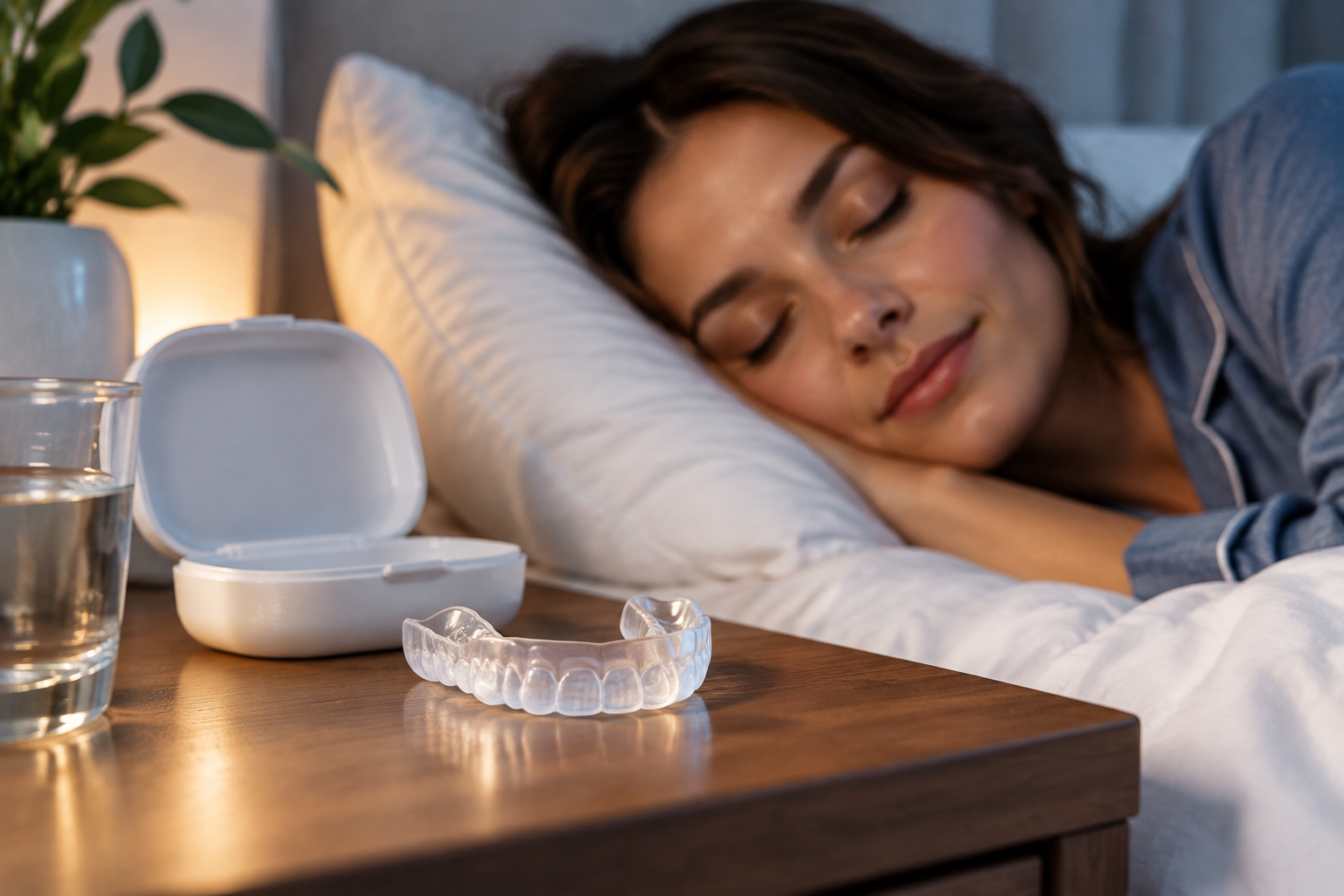
A night guard is an appliance worn over your teeth while you sleep, designed to absorb and spread the force of grinding so your teeth do not take the full load. It is a protective device rather than a cure. If you wake up with a sore jaw, a dull headache around the temples, or a partner who says you sound like a coffee grinder at 2am, this explains what is happening and what your options look like.
What Does Teeth Grinding Actually Do to Your Teeth?
Grinding, clinically known as sleep bruxism, involves clenching and sliding the teeth together with far more force than normal chewing. Chewing pressure is brief and controlled. Night grinding can run for minutes at a time, repeatedly, with no awareness and no reflex to stop. The damage builds quietly:
- Enamel wear. Biting surfaces flatten and lose their ridges. Front teeth can look shorter or chip along the edges.
- Sensitivity. As enamel thins, the dentine underneath becomes exposed and cold drinks start to sting.
- Cracks and fractures. Fillings, crowns and natural tooth structure can crack under sustained load.
- Jaw muscle fatigue. The muscles work all night, which is why soreness is worst in the morning and eases through the day.
- Headaches. Dull, around the temples, often present on waking.
Enamel does not regenerate. That is the main reason not to sit on this for a year.
How Do You Know If You Grind Your Teeth at Night?
Most grinders are asleep when it happens, so the evidence is indirect. Common signs:
- Jaw soreness or stiffness first thing in the morning
- Dull headaches around the temples on waking
- Teeth that look flatter, shorter or chipped at the edges
- New sensitivity to cold or sweet things
- A partner who hears the sound at night
- Indentations along your tongue or ridged lines inside your cheeks
A dentist can usually confirm it at a routine visit, because the wear pattern does not look like ordinary age-related wear.
Chemist Night Guard vs Custom Night Guard
Both sit between your teeth. The difference is fit, and fit determines whether you actually wear it.
| Chemist or boil-and-bite | Custom-made | |
| Fit | Softened in hot water, bitten into for a rough shape | Made from a scan or impression of your teeth |
| Thickness | Bulkier, harder for some people to sleep with | Matched to your grinding pattern |
| Material | Softer, which can encourage chewing on it | Harder wearing, designed for nightly use |
| Lifespan | Months, less for heavy grinders | Years with proper care |
| Bite accuracy | Does not account for how your teeth meet | Bite meets evenly across the guard |
| Cost | Low upfront | Higher upfront, longer lasting |
A chemist guard is a reasonable short trial to test whether wearing something at night is tolerable. The catch is that a bulky, loose guard tends to end up on the bedside table by week two, and a guard you do not wear protects nothing.
Does a Night Guard Stop You From Grinding?
No, and this matters. A night guard protects your teeth from grinding. It does not switch the grinding off.
The grinding usually comes from somewhere else. Stress and anxiety are strongly associated with it, as are some medications, alcohol and caffeine close to bedtime, and sleep-disordered breathing. The guard is the seatbelt, not the brake.
That is why an assessment matters more than simply buying a guard. Grinding alongside loud snoring, pauses in breathing, or persistent daytime tiredness is worth raising with your doctor. Sleep apnoea is diagnosed through a medical sleep study, not at a dental appointment, though a dentist can be part of the treatment picture afterwards. Our page on snoring and sleep apnoea covers where dental care fits in.
How My Smile Doctors Approaches Night Guards in Parramatta
The first question we ask is not which guard you want. It is how much wear has already happened, because that changes the answer. Someone with early wear after a stressful few months at work is in a different situation from someone whose molars have flattened over a decade.
We look at the wear pattern, check whether fillings or crowns are under strain, and talk through what is likely driving it before recommending anything. If a custom guard makes sense, it is made to bite so it sits comfortably enough to sleep in. Our mouth guards page covers the appliances themselves.
Frequently Asked Questions
Q: How long does a night guard last? A: A custom night guard typically lasts several years with proper cleaning and storage, though heavy grinders wear through them faster. Chemist guards last months rather than years, because the softer material breaks down under nightly pressure. Bite-through marks or thin spots mean it is due for replacement.
Q: Can I wear a night guard every night? A: Yes, night guards are designed for nightly use, and the protection only applies on the nights you wear it. Rinse it after each use, brush it gently without toothpaste, which is abrasive enough to scratch it, and let it dry fully in a ventilated case.
Q: Will a night guard fix my jaw pain? A: It can reduce it by cushioning the load on the jaw joint and muscles, but jaw pain has several possible causes. If pain persists, clicks, or restricts how wide you can open, have it assessed rather than managed with an appliance alone.
Q: Is it normal for a night guard to feel uncomfortable at first? A: Some adjustment over the first few nights is expected. A guard that feels tight in one spot, makes your bite uneven, or causes tooth soreness is a fit issue and should be checked rather than tolerated.
Q: Can children get night guards for teeth grinding? A: Grinding is common in children and often resolves as adult teeth come through, so a guard is not always needed. A child’s mouth is still developing, so any appliance needs regular review. Raise it at a check-up rather than using an adult chemist guard.
The Bottom Line
A night guard is a protective appliance, not a cure. It takes the force of grinding so your teeth do not, which matters because worn enamel does not grow back. Chemist guards work as a short trial, but a custom guard is usually the one people keep wearing, because comfort decides whether it stays in all night. If the grinding is persistent, the more useful step is finding out what is driving it.
You can browse more guides on our dental blog, or book a consultation with My Smile Doctors in Parramatta to have the wear on your teeth assessed.
Written by My Smile Doctors, Parramatta Dental Clinic. This article is general information only and is not personal dental advice. Please speak with a registered dental practitioner about your own circumstances.