
TL;DR
A tooth abscess is a pocket of infection that will not clear on its own, because the pus has nowhere to drain and the source stays inside the tooth. If the pain suddenly stops, that usually means the nerve has died, not that the infection has gone. Spreading facial swelling, trouble swallowing or breathing, or fever needs a hospital emergency department, not an appointment.
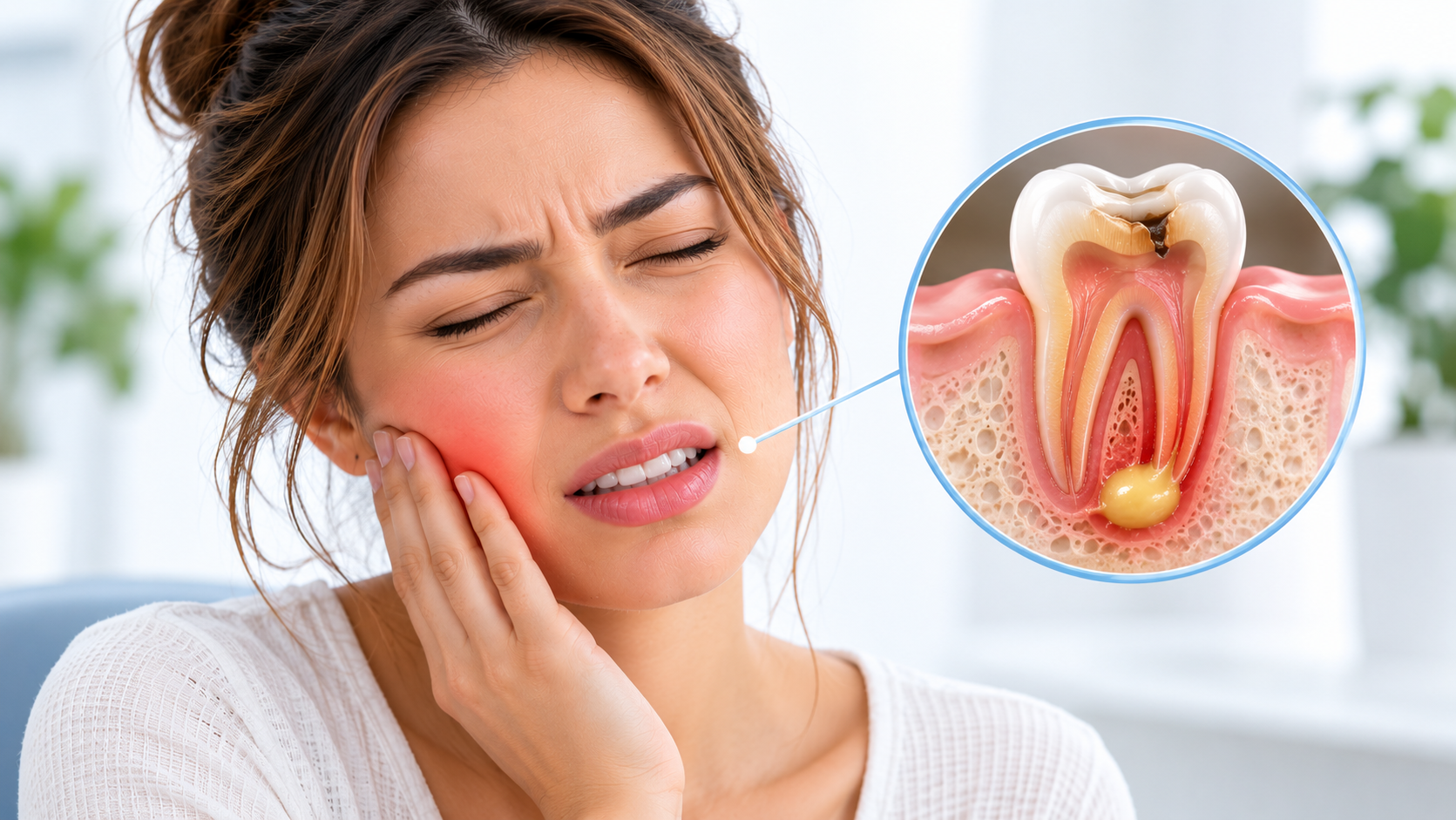
A tooth abscess is a pocket of pus caused by bacterial infection, usually inside a tooth or in the gum beside it. The part people get wrong is what happens when it stops hurting. A throbbing tooth that settles after a few days feels like good news, and it is the most common reason people leave an abscess alone for months. Usually the pain stopped because the nerve inside the tooth died. The infection is still there.
Key Insights
- Pain stopping usually means the pulp has died, not that the infection has cleared.
- An abscess does not resolve by itself. The pus has no drainage path and the source stays in place.
- Antibiotics alone do not cure it. They can slow a spreading infection, but the tooth still needs treating.
- Spreading swelling, trouble swallowing or breathing, or fever is a hospital emergency, not a dental booking.
When is a tooth abscess an emergency?
Go to a hospital emergency department, not a dentist, if you have any of the following. These suggest the infection is spreading beyond the tooth.
- Swelling spreading across your face, especially towards or around the eye
- Swelling under the jaw or in the neck
- Difficulty swallowing, speaking or breathing
- Not being able to open your mouth properly
- Fever, chills, or feeling generally unwell
- Swelling that is getting visibly worse over hours
Dental infections that spread into the tissues of the face and neck can become serious quickly, and the airway is the reason. This is uncommon, but it is the part of this article that matters most.
Anything short of that list, including a painful tooth, a gum boil, or mild local swelling, should be seen by a dentist promptly. Our emergency dental care in Parramatta page covers how to get seen.
Why does a tooth abscess stop hurting?
The pain usually stops because the pulp inside the tooth has died, not because the infection has resolved.
The pulp is the living tissue in the centre of a tooth, holding the nerve and blood supply. When bacteria reach it through deep decay, a crack or a failing filling, it becomes inflamed and intensely painful. If that inflammation cuts off the blood supply, the pulp dies, and a dead nerve cannot send pain signals.
What has not changed is the bacteria. They continue out through the tip of the root into the bone, where the body walls them off into a pocket of pus. That pocket can sit for months with few symptoms, slowly destroying bone around the root, until something tips it into an acute flare-up.
A tooth that hurt badly and then settled is not a tooth that healed. It is often a tooth that loses the ability to complain.
What does a tooth abscess look and feel like?
Signs vary depending on whether the infection sits inside the tooth or in the gum beside it.
- Throbbing pain that can spread to the jaw, ear or neck
- Pain when biting down, or when the tooth is touched
- Sensitivity to heat, sometimes eased briefly by something cold
- A pimple-like bump on the gum, which may leak and leave a salty taste
- Swelling of the gum, cheek or jaw
- A tooth that feels loose or sits slightly high
- Tender, swollen glands under the jaw
That small bump on the gum deserves attention. It is a drainage channel from the infection underneath, and because it releases pressure the pain often eases. People read it as healing. It is the opposite, and it can come and go for a long time.
Will a tooth abscess go away on its own?
No. An abscess does not resolve without treatment, and no home remedy clears it.
The reason is mechanical. Pus is trapped in bone with no path out, and the source of the bacteria, usually a dead pulp or a deep gum pocket, stays where it is. Nothing applied to the outside of the tooth reaches it.
- Salt water rinses can ease soreness and keep the area clean. They do not reach the infection inside the tooth.
- Clove oil, garlic and oil pulling may dull surface discomfort briefly. None treat the source.
- Leftover antibiotics from a previous illness are the riskiest. A partial course can quieten symptoms while the infection continues, and it contributes to antibiotic resistance.
On antibiotics generally, since it is the most common question. A dentist or doctor may prescribe them when an infection is spreading, but they do not cure a dental abscess. Until the dead pulp or infected pocket is dealt with, the infection has somewhere to come back from.
How is a tooth abscess treated?
Tooth abscess treatment removes the source of the infection and drains the pus. Which approach depends on where the infection started.
| Where it started | Usual approach |
| Inside the tooth, from a dead pulp | Root canal treatment, or removal of the tooth |
| In the gum, from a deep periodontal pocket | Drainage and thorough cleaning of the pocket |
| Significant swelling present | Incision and drainage to release the pus |
| Infection spreading, person unwell | Medical care first, then dental treatment |
An x-ray is usually needed, because the pocket of infection sits in bone at the root tip and cannot be seen by looking at the tooth. Our emergency abscess treatment page covers what the appointment involves.
Frequently Asked Questions
Q: Can a tooth abscess heal itself if the swelling goes down? A: No. Swelling often reduces when the abscess finds a drainage path through the gum, which relieves pressure and makes things feel better. The infection underneath continues. Swelling going down is not evidence that the source has gone.
Q: How long can you leave a tooth abscess? A: It should be treated as soon as possible. Some stay quiet for months while damaging bone around the root, others flare into facial swelling within days. There is no safe waiting period, and the longer it goes the less likely the tooth can be saved.
Q: Is a gum boil the same as a tooth abscess? A: The bump on the gum is usually a drainage channel from an abscess rather than the abscess itself. It signals infection deeper down, not a separate minor problem. Because it releases pressure it can come and go for months, which is why it gets ignored.
Q: Can a tooth abscess make you seriously ill? A: It can, though this is uncommon. Infection spreading into the tissues of the face and neck can affect swallowing and breathing and needs emergency hospital care. Fever or spreading swelling alongside a dental infection should never be managed at home.
The Bottom Line
A tooth abscess will not clear on its own, and the most misleading moment is the one where it stops hurting. That usually means the nerve has died while the infection carries on in the bone underneath. A gum boil that comes and goes means the same thing.
If you have spreading swelling, difficulty swallowing or breathing, or a fever, go to a hospital emergency department. For anything else, get in touch with My Smile Doctors in Parramatta and have it looked at properly.
Written by My Smile Doctors, Parramatta Dental Clinic. This article is general information only and is not personal dental advice. Please speak with a registered dental practitioner about your own circumstances.