
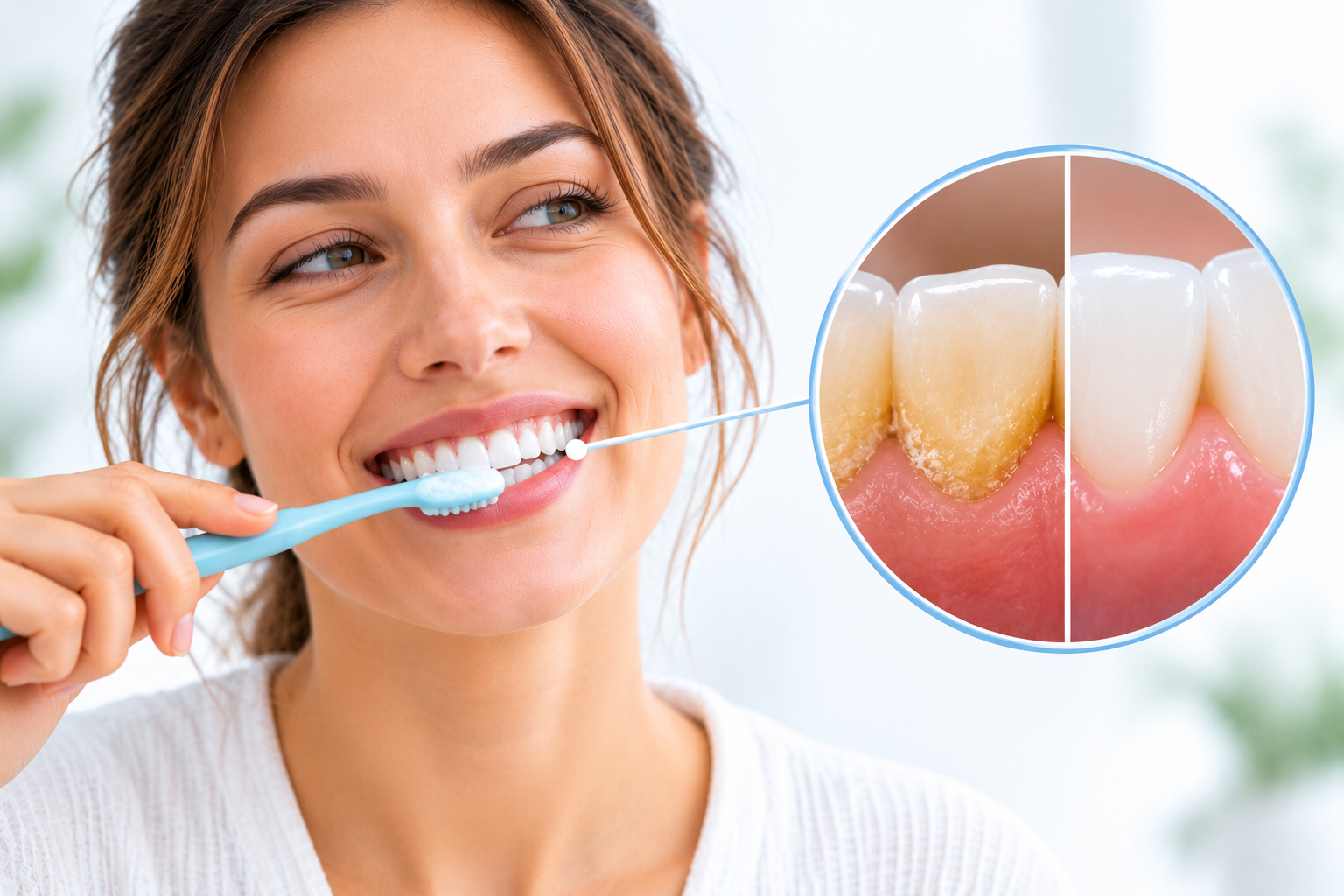
TL;DR
The plaque is soft and you can remove it at home with brushing and cleaning between your teeth. Tartar is plaque that has hardened with minerals from saliva, usually within two to three days, and it bonds to the tooth. No toothpaste, rinse or home scraper removes it. Scraping with a bought dental pick scratches enamel and damages gum, and the damage does not reverse.
Knowing how to remove plaque from teeth is mostly a matter of knowing where the limit is. The plaque is soft, it forms within hours, and you can clear it yourself every day. Tartar is what plaque becomes once it hardens, and no amount of brushing shifts it. That distinction matters right now because dental scrapers are being sold online and used on camera, and the people buying them are usually trying to remove the one thing a scraper cannot safely touch.
Key Insights
- The plaque is soft and removable at home. Tartar is hardened and bonded to the tooth.
- Plaque starts mineralising into tartar within about 24 to 72 hours, which is why daily cleaning matters more than hard cleaning.
- Home dental scrapers scratch enamel and cut gum tissue, and a scratched surface collects plaque faster than a smooth one.
- Tartar below the gum line cannot be seen or reached without instruments and direct vision.
What is the difference between plaque and tartar?
Plaque is a soft, sticky film of bacteria that you can remove yourself. Tartar is plaque that has hardened with minerals from your saliva, and only a dentist or hygienist can remove it.
| Plaque | Tartar | |
| What it is | Living film of bacteria | Hardened, mineralised plaque |
| How fast it forms | Within hours of cleaning | Around 24 to 72 hours after plaque settles |
| How it feels | Slightly fuzzy, especially on waking | Rough, gritty, often ridged near the gum |
| Colour | Clear to pale yellow, easy to miss | Yellow, brown or chalky white |
| Can you remove it? | Yes, at home | No |
The part people miss is the timeline. Plaque does not stay soft and wait for you. Mineral salts in saliva start turning it to stone within a day or two, which is why skipping between-teeth cleaning for a week does more harm than brushing a bit gently on any single day.
Tartar also builds fastest where saliva enters the mouth, behind the lower front teeth and on the cheek side of the upper back teeth. Roughness in exactly those two spots is not a sign you have been careless.
How do you remove plaque from teeth at home?
Plaque comes off with daily mechanical cleaning. Brushing twice a day and cleaning between your teeth once a day removes it before it can harden.
- Brush twice daily for two minutes with a soft brush and fluoride toothpaste, angling the bristles towards the gum line rather than scrubbing across the tooth.
- Clean between your teeth every day, with floss or interdental brushes. This is the step most people skip, and those gaps are exactly where a brush has never reached.
- Use light pressure. Pressure does not remove plaque faster. It wears enamel and gum, and an electric brush with a pressure sensor takes the judgement out of it.
- Try disclosing tablets occasionally. They stain plaque so you can see what you are missing, and most people are surprised.
If your gums bleed when you clean between your teeth, that is usually inflammation from plaque along the gum line rather than a reason to stop. Our gum disease information covers what that means.
Can you remove tartar at home?
No. Once plaque has mineralised, it is chemically bonded to the tooth surface, and nothing you can buy removes it safely.
This is where the home scraper trend goes wrong. The metal picks sold online are real instruments, which is part of the problem. Used without training they cause four specific kinds of damage:
- Enamel scratches. Permanent, and a roughened surface collects plaque faster than a smooth one, so the problem accelerates.
- Gum trauma. The instrument slips. Cutting the gum margin is common, and repeated injury in one place contributes to recession.
- Debris pushed below the gum line. Fragments get driven into the pocket rather than removed from it, which is the opposite of the intention.
- No way to check the result. Most tartar that matters sits below the gum line where you cannot see it, so clearing the visible part changes very little.
A hygienist works with direct vision, a mirror, suction and knowledge of root anatomy. The instruments are the smallest part of it.
Salt rinses, oil pulling, baking soda and vinegar come up in the same conversation. Rinses help with freshness and some surface debris. None dissolve calculus, and acidic ones strip enamel while failing to.
What happens if tartar is left?
Tartar is porous and rough, so it holds more plaque against the tooth and gum, and the problem compounds rather than sitting still.
The usual sequence is gum inflammation first, showing as redness and bleeding, which is reversible at that stage. Left longer, inflammation can move deeper and affect the bone supporting the tooth, and that part does not reverse. Persistent bad breath and gum recession often travel with it. The encouraging part is that this is slow, and very visible to a dentist long before it becomes serious.
How is tartar actually removed?
Tartar removal is done by scaling, using ultrasonic and hand instruments to break the calculus away above and below the gum line, followed by polishing.
Most people need this once or twice a year. Some build calculus quickly because of saliva chemistry and need checking more often, which is a plumbing matter rather than a hygiene failing. A routine check-up and clean is also when early decay and gum changes get picked up, usually before anything hurts.
Frequently Asked Questions
Q: Does tartar-control toothpaste remove tartar? A: No. These toothpastes contain ingredients that slow new plaque from mineralising, which is useful. They do not remove calculus that has already formed. The name points to prevention rather than removal, and that is what it does.
Q: Can I scrape tartar off with a dental pick from the chemist? A: It is not advisable. You will likely scratch the enamel, which makes future plaque stick faster, and cutting the gum margin is easy to do. Most tartar that matters sits below the gum line where you cannot see it, so the visible result says little about what was achieved.
Q: How long does plaque take to turn into tartar? A: Generally 24 to 72 hours, depending on your saliva. That is why daily cleaning between the teeth matters more than how hard you brush, and why a few missed days shows up faster than people expect.
Q: Why do I get tartar even though I brush twice a day? A: Usually because brushing alone cannot reach between the teeth or along the gum line, and partly because some people’s saliva mineralises plaque faster than others. It is common, and not evidence you are doing something wrong.
The Bottom Line
Plaques you can handle at home, and doing it daily is what keeps tartar from forming in the first place. Tartar you cannot, and the scrapers being sold for the job damage enamel and gum while leaving the part that matters untouched.
You can browse more guides on our dental blog, or book a check-up and clean with My Smile Doctors in Parramatta.
Written by My Smile Doctors, Parramatta Dental Clinic. This article is general information only and is not personal dental advice. Please speak with a registered dental practitioner about your own circumstances.