
TL;DR
Receding gums cannot grow back. Once gum tissue pulls away from a tooth, the body does not rebuild it, and no toothpaste, oil or rinse will. The good news is that recession can almost always be stopped, and caught early it usually needs nothing more than a change in brushing technique and a professional clean. Posts claiming healed gums are describing reduced swelling, not regrown tissue.
Receding gums do not grow back. If you have been reading posts titled “I healed my receding gums” and wondering why your own have not changed, that is why. Once the gum has pulled away from the tooth and exposed the root, the body does not rebuild it on its own. What those posts describe is something real but different, and knowing the difference stops you wasting six months on the wrong thing.
Key Insights
- Gum tissue does not regenerate. Recession is permanent unless tissue is surgically replaced.
- Recession can almost always be stopped, which matters far more than whether it reverses.
- The two biggest causes pull in opposite directions. Gum disease, and brushing too hard.
- Loose teeth, pus, or gums that change quickly are urgent. Slow recession is not, but still needs checking.
Can receding gums grow back?
No. Gum tissue does not regenerate once it has receded, and neither does the bone underneath it.
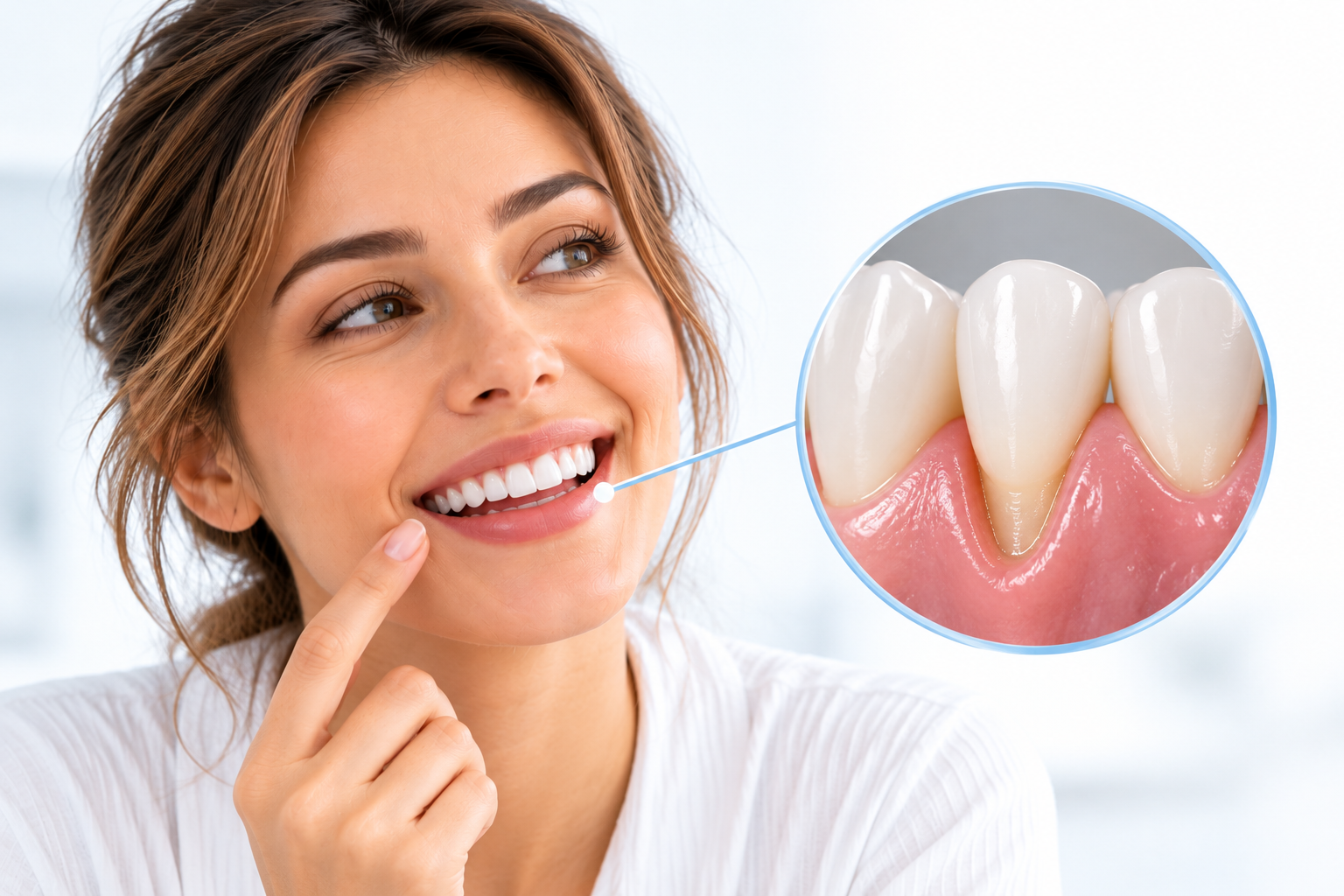
Your gum sits against the tooth and is anchored by the bone beneath. When recession happens, the gum margin moves down the tooth and exposes a root surface that was never meant to be visible. The body has no mechanism for rebuilding that attachment by itself. People spend months on toothpaste while the real cause keeps working away underneath.
Why are my gums receding?
Recession usually comes from one of two directions, and they need opposite responses.
Gum disease. Plaque and hardened calculus along the gum line cause inflammation. Left long enough, that inflammation destroys the attachment holding the gum to the tooth. This is the more serious cause, because it affects the supporting bone as well.
Brushing too hard. Scrubbing with a hard-bristled brush physically wears the gum away. People who do this are usually brushing carefully and often, which is the cruel part. The effort is real, the technique is the problem.
Other contributors include naturally thin gum tissue, which is genetic, crowded teeth with less bone covering them, grinding, smoking, and orthodontic movement through a thin area of bone.
A dentist can usually tell which cause is driving yours from the pattern. Disease-driven recession tends to be widespread with inflamed tissue. Brushing-driven recession often shows on one side more than the other, because most people scrub harder with their dominant hand.
What the “I healed my receding gums” posts are actually describing
This is the part almost nobody explains, and it is why so many people genuinely believe they fixed theirs.
When gums are inflamed, they swell. Once someone improves their cleaning, stops scrubbing, or has a professional clean, the inflammation settles, the bleeding stops and the tissue looks pink and firm again. That is a real improvement. It is just not regrowth. The attachment level, which is what a dentist actually measures, has not changed.
So the people writing those posts are not lying. They improved something genuine and deserve credit for it. They have attributed it to the wrong thing, which is why the advice that follows points at a product rather than at the cause.
One thing worth knowing. When badly inflamed gums settle after treatment, recession can briefly look worse, because the swelling hiding the root has gone. That is healing, not deterioration, and it catches people out.
How do you stop receding gums from getting worse?
Stopping the progression is realistic for most people, and it is the goal worth having.
- Switch to a soft brush and change the technique. Small circles at the gum line, light pressure. Pressure does not clean better, it wears tissue. An electric brush with a pressure sensor removes the guesswork.
- Clean between the teeth daily. Recession usually starts where the brush never reaches.
- Get the calculus removed. Hardened deposits cannot be brushed off and hold plaque against the gum line. A professional check-up and clean is the only way to remove them.
- Have the recession measured and recorded. The most useful thing here. Measured in millimetres each visit, it tells you whether it is stable or progressing, which turns a worry into a fact.
- Treat grinding if it is happening, and stop smoking if you do.
If gum disease is the cause, treating the disease comes first. Our gum disease treatment page covers what that involves.
What are the treatment options for receding gums?
Treatment depends on whether the problem is sensitivity, appearance, or active disease.
| Concern | Typical approach |
| Active gum disease | Deep cleaning below the gum line, then maintenance |
| Sensitivity from exposed root | Desensitising products, fluoride varnish |
| Root worn or decaying | A tooth-coloured filling to cover the surface |
| Appearance, or very little gum left | Gum grafting to cover the root |
Grafting is worth understanding properly. It does not regrow your gum. It places tissue over the exposed root, usually taken from elsewhere in your mouth. It is surgery, outcomes vary between people, and it is generally reserved for recession that is severe or worsening rather than for mild cases.
When should you see a dentist about receding gums?
Soon in almost all cases, because the value is in knowing whether it is progressing. Some things should not wait at all:
- Teeth that feel loose or have moved
- Pus, or a bad taste that keeps coming back
- Gums that bleed persistently despite good cleaning
- Recession that changes over weeks rather than years
- Sensitivity severe enough to change what you eat
Slow, mild recession without these signs is not an emergency, but it still deserves a look. The earliest stage is where the smallest change makes the biggest difference.
Frequently Asked Questions
Q: Can any toothpaste reverse receding gums? A: No toothpaste regrows gum tissue, whatever the packaging suggests. Some genuinely help with sensitivity by blocking the exposed tubules in the root, and that relief is real. What they do not do is restore the gum. If a product claims regrowth, that claim is not supported.
Q: Does oil pulling help receding gums? A: There is limited evidence it may slightly reduce plaque, and none that it reverses recession. It is not harmful as an extra, but it is no substitute for brushing, cleaning between teeth, or having calculus professionally removed.
Q: How fast do receding gums get worse? A: It varies. Recession from untreated gum disease can progress over months, while recession from brushing technique may stay stable for years once the technique changes. That is why having it measured matters more than watching it in the mirror.
Q: Is gum recession always a sign of gum disease? A: No, and this is a common worry. Plenty of recession comes from brushing too hard, tooth position, or naturally thin gum tissue, with no disease present. The two need different treatment, so identifying the cause is the useful first step.
The Bottom Line
Receding gums do not grow back, and no amount of oil pulling or special toothpaste changes that. What the posts describe as healing is inflammation settling, which is a genuine improvement but a different one. What deserves your attention is that recession can almost always be stopped, and the earlier the cause is found, the less there is to do about it.
You can browse more guides on our dental blog, or book a check-up with My Smile Doctors in Parramatta to have your gums measured and the cause identified.
Written by My Smile Doctors, Parramatta Dental Clinic. This article is general information only and is not personal dental advice. Please speak with a registered dental practitioner about your own circumstances.