If you have seen people taping their mouths shut before bed and wondered whether that is a good idea or just another internet thing, you are asking a sensible question. Mouth taping has been all over TikTok for a few years now, promising better sleep, less snoring, even a sharper jawline. So is mouth taping safe? For some people, probably harmless. For others it can hide a problem that needs looking at. The difference comes down to why you are breathing through your mouth in the first place.
Key Insights
- Mouth taping is the practice of holding the lips closed with tape during sleep to force nasal breathing, and research into it remains very limited.
- Nasal breathing genuinely is better for your mouth than mouth breathing, so the idea behind the trend is not wrong.
- The main risk is masking undiagnosed obstructive sleep apnoea, where snoring is a symptom rather than the problem itself.
- If your nose is blocked by congestion, allergies or a deviated septum, taping your mouth shut does not fix the blockage.
What Is Mouth Taping?
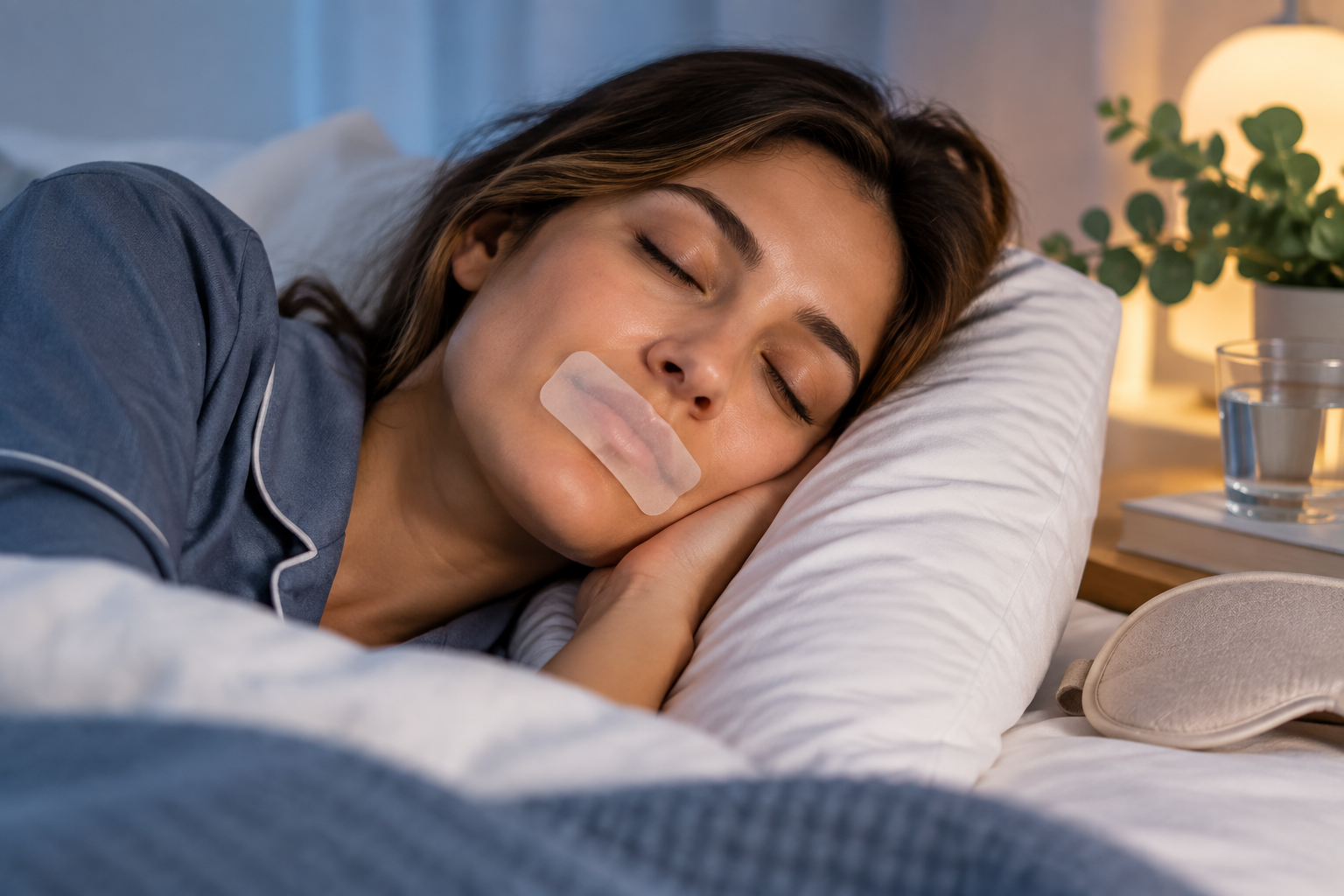
Mouth taping is the practice of sleeping with your lips held closed by a strip of porous surgical tape, so you breathe through your nose instead of your mouth.
It spread through social media during the 2020s with claims about deeper sleep, less snoring and facial changes. Most have not been properly tested, and we would rather say that than pretend the evidence is stronger than it is.
The idea it borrows from is sound though. Nasal breathing filters and humidifies air, allows fuller breaths, and produces nitric oxide in the nasal sinuses, which helps blood flow. Your nose is built for breathing. Your mouth is not.
Is Mouth Taping Safe?
For a healthy adult with a clear nose and no sleep disorder, mouth taping is probably low risk. It becomes genuinely risky when someone has an undiagnosed breathing problem, because taping the mouth shut removes a backup airway without addressing why it was needed.
If you breathe through your mouth at night, your body is doing it for a reason. Sometimes that reason is habit. Often it is not. Causes worth ruling out first include nasal congestion, allergies, a deviated septum, sinusitis, enlarged tonsils or adenoids, and obstructive sleep apnoea. Taping over any of those does not resolve them.
There is a practical point people underestimate too. With a blocked nose and a taped mouth you will usually just wake up, which is not dangerous but is not the improved sleep the videos promise either.
What Does Mouth Breathing Do to Your Teeth?
Mouth breathing dries out the mouth overnight, and reduced saliva raises your risk of tooth decay, gum inflammation and bad breath.
This is the part dentists actually see, and it is why we have a view on the trend at all.
Saliva is not just moisture. It neutralises acid, washes away food particles, and carries the minerals that repair early enamel damage daily. When your mouth stays open for seven or eight hours, all three protections weaken at once. Xerostomia is the clinical term for that dryness, and it is a well established risk factor for dental caries.
The pattern we see is specific. Decay along the gum line of the upper front teeth, gums that are puffy and bleed at the front, and morning bad breath that brushing does not fix. If you have noticed any of these, they are worth a look at your next dental check up.
When Should You See Someone Before Taping?
You should speak to a doctor before trying mouth taping if you snore heavily, wake up gasping, feel exhausted despite sleeping enough hours, or have been told you stop breathing during sleep.
Those are possible signs of obstructive sleep apnoea, where the airway repeatedly closes during sleep. It is diagnosed with a sleep study arranged through a doctor, not by a dentist and definitely not by a video.
We want to be clear about that boundary. Diagnosing sleep apnoea is not a dentist’s role. What dentists can do is notice the signs, discuss the dental effects, and work alongside your doctor on oral appliance options once a diagnosis exists. Our snoring and sleep apnoea page covers where dentistry fits in.
This matters more than it sounds. Snoring that disappears under tape can feel like success while the apnoea continues untreated, and untreated apnoea is linked to cardiovascular strain, not just tiredness.
What Works Better Than Tape?
The more reliable approach is to find out why you are mouth breathing and address that, rather than forcing the mouth closed.
- See your GP about nasal obstruction. Allergies, congestion and structural issues like a deviated septum all have proper treatments.
- Ask about a sleep study if any of the signs above apply to you.
- Consider myofunctional therapy, which retrains tongue posture, swallowing and breathing under supervision. We have written about how myofunctional therapy works in more detail.
- Protect your teeth meanwhile. A high fluoride toothpaste and a saliva substitute reduce the damage while you sort out the cause.
If this sounds familiar, our article on whether mewing works covers the same tension between a reasonable idea and an overstated online version of it.
Frequently Asked Questions
Q: Is mouth taping safe for everyone? A: No. It is likely low risk for a healthy adult who breathes comfortably through their nose, but not suitable for anyone with untreated sleep apnoea, significant nasal obstruction, or difficulty removing the tape. Children should not be mouth taped. If you snore heavily or wake tired, see a doctor first.
Q: Does mouth taping actually stop snoring? A: It may reduce snoring caused simply by an open mouth, but it does not treat snoring caused by airway collapse, which is what happens in obstructive sleep apnoea. Quietening the symptom without touching the cause can delay a diagnosis that matters, so persistent snoring is worth investigating properly.
Q: Can mouth breathing really damage your teeth? A: Yes. Mouth breathing overnight dries out saliva, your natural defence against decay and gum disease. Less saliva means acid sits on teeth longer and early damage is not repaired, raising the risk of cavities, gum inflammation and bad breath. Dentists often see this as decay along the gum line of the upper front teeth.
Q: What tape should I use if I try it? A: If you try it after ruling out the concerns above, use a porous tape designed for skin, and many people prefer a small strip rather than sealing the lips completely. Never use household tape. If you wake struggling to breathe or the tape irritates your skin, stop.
The Bottom Line
The instinct behind mouth taping is reasonable. Nasal breathing is better for your teeth and gums, and mouth breathing is a real dental problem rather than a cosmetic worry. Where the trend goes wrong is treating tape as the solution instead of asking why the mouth was open in the first place.
If you wake with a dry mouth most mornings, or your gums bleed at the front, that is worth mentioning at your next appointment rather than taping over. You can read more of our guides on our dental blog, or book a check up with our team in Parramatta.
Written by My Smile Doctors, Parramatta Dental Clinic. This article is general information only and is not personal dental or medical advice. Sleep disorders are diagnosed by medical practitioners, so please speak with your doctor about any sleep breathing concerns and with a registered dental practitioner about your teeth.